Top 10 Benefits of Tire Pressure Sensors for Safe Driving
In today's automotive landscape, ensuring safety and efficiency on the road is a top priority for drivers and manufacturers alike. Tire pressure sensors have emerged as essential components in modern vehicles, significantly contributing to safe driving practices. According to a recent report by the National Highway Traffic Safety Administration (NHTSA), underinflated tires result in approximately 10,000 accidents annually in the United States alone, highlighting the critical role that effective tire pressure monitoring can play in preventing such incidents. With an increasing focus on road safety, the implementation of tire pressure sensors is no longer just a luxury but a necessity.
Experts in the field, like Dr. Emily Carter, a leading researcher at the Institute for Automotive Safety, emphasize the importance of tire pressure sensors in vehicle safety systems. She states, "Tire pressure sensors not only enhance fuel efficiency but, more importantly, they play a pivotal role in accident prevention by alerting drivers to abnormalities that could compromise vehicle control." As vehicles become more technologically advanced, the integration of tire pressure monitoring systems represents a significant step towards reducing road hazards and promoting safer driving environments. This article delves into the top 10 benefits of tire pressure sensors, showcasing their undeniable value in modern automotive safety.

Advantages of Tire Pressure Sensors for Enhanced Vehicle Safety
Tire pressure sensors play a crucial role in enhancing vehicle safety by providing real-time data that helps drivers monitor their tire health. According to the National Highway Traffic Safety Administration (NHTSA),
properly inflated tires can improve fuel efficiency and extend tire life significantly. In fact, tires that are inflated to the recommended levels can increase a vehicle's fuel economy by up to
3%, simultaneously reducing carbon emissions. This data underscores the importance of maintaining optimal tire pressure, not just for safety, but also for
environmental sustainability.
Moreover, the effectiveness of tire pressure monitoring systems (TPMS) in preventing accidents has been highlighted in various studies. Research from the Automotive Engineering Society indicates that vehicles equipped with TPMS experience a
50% reduction in tire blowouts, which are often a direct consequence of low tire pressure. This is particularly critical considering that tire-related crashes account for a significant number of road incidents each year.
With tire pressure sensors alerting drivers to any significant changes in pressure, they can take proactive measures, thereby enhancing overall road safety for themselves and others.
The integration of these sensors can create a safer driving environment, ensuring that drivers are better informed and prepared to avoid potential hazards on the road.
How Tire Pressure Sensors Prevent Tire Blowouts and Accidents
Tire pressure sensors, particularly those integrated into tire pressure monitoring systems (TPMS), play a crucial role in enhancing vehicle safety by preventing tire blowouts and related accidents. According to the National Highway Traffic Safety Administration (NHTSA), under-inflated tires contribute to a significant percentage of road incidents, with nearly 300 fatalities and thousands of injuries occurring annually due to tire blowouts. By constantly monitoring the tire pressure, these sensors alert drivers when pressures fall below recommended levels, allowing timely intervention to inflate tires or replace them if necessary.
In addition to preventing accidents, maintaining optimal tire pressure through these sensors can improve overall vehicle performance. A report by the Tire Industry Association suggests that properly inflated tires can enhance fuel efficiency by up to 3%. This not only translates to cost savings for drivers but also contributes to reduced carbon emissions, making it a win-win situation for both safety and environmental concerns. Furthermore, consistent tire health checks via pressure sensors can extend tire lifespan, minimizing the risk of sudden tire failure while driving, thus significantly decreasing the likelihood of automotive emergencies on the road.
Top 10 Benefits of Tire Pressure Sensors for Safe Driving
| Benefit |
Description |
Impact on Safety |
| Prevents Blowouts |
Tire pressure sensors alert the driver when pressure is dangerously low, reducing the risk of blowouts. |
High |
| Improved Fuel Efficiency |
Maintaining optimal tire pressure helps in improving fuel consumption. |
Medium |
| Enhanced Handling |
Correct tire pressure ensures better traction and handling of the vehicle. |
High |
| Extended Tire Lifespan |
Properly inflated tires last longer, saving money on replacements. |
Medium |
| Real-Time Monitoring |
Sensors provide real-time updates on tire pressure, enabling proactive measures. |
High |
| Reduction in Emissions |
Well-inflated tires contribute to lower vehicle emissions. |
Medium |
| Warning System for Drivers |
Alerts drivers about tire issues before they become serious problems. |
High |
| Increased Asset Value |
Vehicles with advanced monitoring features are generally valued higher. |
Low |
| Compliance with Regulations |
Some regions require the use of tire pressure monitoring systems for safety compliance. |
Medium |
| Improved Driving Confidence |
Drivers feel safer knowing their tires are under constant surveillance. |
High |
Monitoring Real-Time Tire Pressure for Optimal Performance
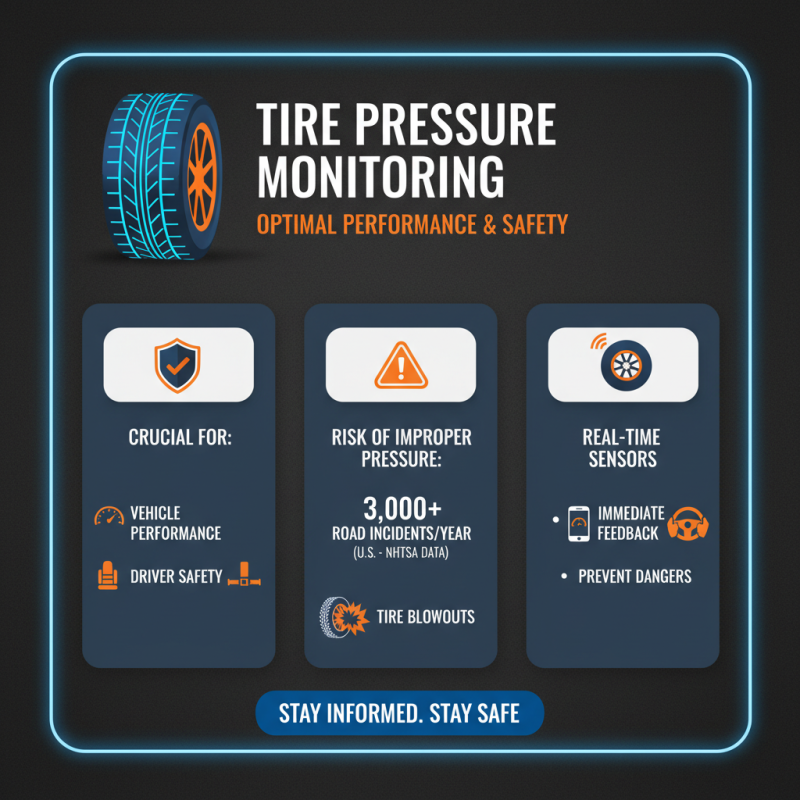
Monitoring tire pressure in real time is crucial for ensuring optimal vehicle performance and enhancing driver safety. According to the National Highway Traffic Safety Administration (NHTSA), improper tire pressure is a leading cause of tire blowouts, contributing to nearly 3,000 road incidents each year in the United States alone. Tire pressure sensors provide drivers with immediate feedback on the condition of their tires, allowing them to make quick adjustments and avoid potentially dangerous situations.
In addition to improving safety, maintaining optimal tire pressure can significantly impact fuel efficiency. The U.S. Department of Energy reports that properly inflated tires can improve fuel economy by 0.6% to 3% for every 1 psi drop in pressure. This not only translates to cost savings for drivers but also reduces carbon emissions, aligning with sustainability efforts in the automotive industry. By continuously monitoring tire health through pressure sensors, drivers are empowered to make informed decisions regarding their vehicle's performance and environmental footprint, thus promoting safer and more efficient driving habits.
The Role of Tire Pressure Sensors in Fuel Efficiency Improvement
Tire pressure sensors play a crucial role in enhancing fuel efficiency for vehicles. When tire pressure is appropriately maintained, rolling resistance is minimized, allowing the vehicle to use fuel more effectively. Underinflated tires create increased friction on the road, which not only leads to higher fuel consumption but also accelerates tire wear, resulting in the need for premature replacements.
By utilizing tire pressure sensors, drivers can receive real-time data on their tire conditions, making it easier to adjust pressures as needed for optimal performance.
Moreover, maintaining proper tire pressure contributes significantly to overall safety and efficiency. A vehicle operating with properly inflated tires experiences better handling and stability, reducing the risk of accidents. This not only ensures the driver's safety but also promotes more economical driving habits.
As fuel prices continue to fluctuate, the importance of tire pressure sensors becomes even more apparent, as they empower drivers to make informed decisions that ultimately lead to savings at the pump and reduced environmental impact. The integration of these sensors into modern vehicles illustrates a commitment to safer and more sustainable driving practices.
Integrating Tire Pressure Sensors into Modern Vehicle Technologies
The integration of tire pressure sensors into modern vehicle technologies is revolutionizing the way drivers interact with their vehicles. These sensors play a crucial role by continuously monitoring tire pressure, providing
real-time feedback to the driver. This technology not only enhances safety but also contributes to improved fuel efficiency and overall vehicle performance. With accurate data at their fingertips, drivers can make informed decisions, reducing the risks associated with
under-inflated or over-inflated tires which significantly impact handling and braking.
Moreover, the advent of advanced driver-assistance systems (ADAS) further elevates the importance of tire pressure sensor integration. By linking tire pressure data with other vehicle systems, such as stability control and anti-lock braking systems, these sensors can contribute to greater vehicle stability and predictable handling. This synergy not only makes driving safer but also encourages a proactive approach to vehicle maintenance, as drivers are alerted to tire issues before they escalate into more serious problems. Ultimately, the seamless incorporation of tire pressure sensors into modern vehicle technologies underscores their indispensable role in promoting safer driving practices and enhancing the overall driving experience.