
Choosing a Water Drilling Rig in 2026 starts with the site, not the sales brochure. Ground conditions, target depth, required water yield, and access constraints all affect the right choice. A rig that performs well on open, dry ground may struggle on a narrow property or in fractured rock. Small details matter. Check the working height, transport width, available power, and space needed to handle drill rods. These figures can change what is practical before drilling even begins.
This guide explains how to compare rig types, drilling methods, and essential specifications for real project conditions. It also covers pump capacity, flushing systems, mast strength, control layout, maintenance access, and operator support. Ask manufacturers for documented performance ranges, service requirements, and references from similar geology. Then compare those details with advice from experienced local drillers; no specification sheet can fully predict a difficult formation. A larger machine is not automatically the better investment. Fuel use, setup time, spare-part availability, and crew experience can matter just as much. There is room for judgment here, especially when site records are incomplete. Use the guide to build a clear shortlist, identify questions that need expert review, and choose equipment suited to the work rather than the headline rating.
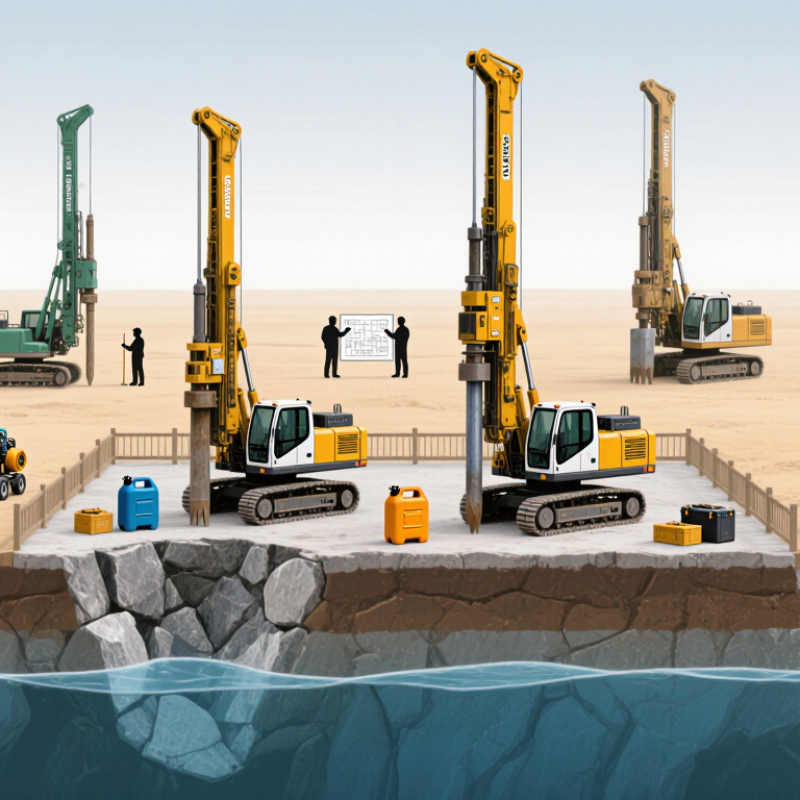
Before choosing a water drilling rig in 2026, define what the well must deliver. Estimate daily use for drinking, cooking, livestock, irrigation, or a small business. A household may need steady flow during morning showers, while crop irrigation can demand much more water during dry weeks. Note peak demand, not just the daily average. Be realistic.
Next, describe the drilling site and the likely water source. Local well records, a hydrogeological assessment, and advice from a qualified drilling professional can help estimate depth, ground conditions, and expected yield. Rocky layers, loose soils, and a narrow access road may affect rig size and setup. Do not treat a neighbor’s well depth as a guarantee; nearby conditions can change quickly.
Tips: Write down your target flow rate, expected depth, access limits, and intended uses before comparing equipment. Ask how the rig handles the ground conditions identified for your site, and what support is needed for transport and operation. Keep a little room in your estimates. I have seen plans change once test drilling reveals harder rock or a lower water yield than expected. That uncertainty is worth discussing early.
How to Choose a Water Drilling Rig in 2026?
Compare the Main Types of Water Drilling Rigs
Rotary rigs use a rotating bit and drilling fluid to clear cuttings. They suit many formations and can reach substantial depths, but pumps, fluid handling, and transport add complexity. Direct-air rotary can speed drilling in stable rock, though dusty or fractured ground may complicate operations. Match the method to a site-specific geological survey, not just the rig’s rated depth.
Down-the-hole hammer rigs drive a pneumatic hammer near the bit. They are effective in hard rock and often produce straight holes, but need reliable air supply and careful dust control. Cable-tool rigs work by repeatedly lifting and dropping a heavy bit. They are slower, yet their simple mechanics can be useful where water circulation is difficult. For shallow, soft deposits, auger rigs may be practical; they are generally a poor fit for deep or hard-rock wells. Hard rock rewards the right tool.
The stakes are significant: the USGS report Estimated Use of Water in the United States in 2015 recorded about 82.3 billion gallons of groundwater withdrawals per day nationwide. That figure describes demand, not rig performance, but it underscores why sound well construction matters. Compare access, formation, target depth, water availability, and maintenance capacity. I would still verify local drilling records before choosing; published rig comparisons rarely capture every site’s surprises. A wet cuttings sample can change the plan.
Indicative drilling-depth ranges by common rig configuration
Typical depth capability varies substantially with geology, borehole diameter, drilling method, tooling, and rig model. Use these broad ranges for initial comparison, then confirm project requirements with the rig manufacturer and a local drilling professional.
How to Choose a Water Drilling Rig in 2026?
Match rig capacity to the formation and planned well depth, not just the project estimate. Depth changes everything. A shallow well in loose sand may need steady casing advancement and careful fluid control. Hard, fractured rock can require a down-the-hole hammer, adequate compressor flow, and enough torque to keep the bit working. Ask contractors to verify these demands against the rig’s rated depth, pullback force, mast capacity, and drilling method.
The USGS report Estimated Use of Water in the United States in 2015 put groundwater withdrawals at about 82.3 billion gallons per day, roughly one-quarter of freshwater withdrawals. That scale shows why reliable wells matter, but it does not tell you what rig to buy. Local geology does. Request nearby well logs, recorded depths, casing intervals, and notes on water-bearing layers. A neat spreadsheet can still miss a troublesome gravel seam.
Compare the rig’s working capacity with the deepest credible target, not only the average depth. Check whether the pump or compressor can support the chosen drilling method under real site conditions. Ask how the setup handles casing, unstable formations, and access limits on the pad. Leave a practical margin; ground conditions rarely follow the estimate perfectly. That part is easy to overlook.
| Ground Conditions | Suitable Drilling Method | Typical Well-Depth Range | Indicative Hole Diameter | Rig Capacity to Check | Selection Notes |
|---|---|---|---|---|---|
| Soft clay, silt, and shallow unconsolidated deposits | Rotary drilling with drilling fluid; casing may be needed in unstable sections | About 30–150 m | Approximately 150–300 mm | Confirm rated depth with the intended drill-pipe size; a compact rig may have roughly 30–80 kN of pullback capacity | Fluid circulation helps remove cuttings and support the borehole. Allow for casing and additional pullback if loose layers may collapse. |
| Sand and gravel, including water-bearing layers | Mud rotary with temporary or permanent casing as required | About 50–250 m | Approximately 150–350 mm | Check pump flow and pressure, mud-system capacity, hoist load, and pullback—not just the advertised maximum depth | Coarse, permeable formations can lose drilling fluid. Plan for fluid-loss control and a casing strategy before drilling. |
| Mixed overburden above weathered or fractured rock | Rotary drilling with casing advancement, or a combined rotary and down-the-hole hammer system | About 80–300 m | Approximately 150–300 mm | Look for sufficient mast clearance, torque, pullback, and compatibility with casing equipment and hammer tooling | Alternating soil and rock can require frequent changes in tooling. A rig that supports multiple drilling methods can reduce delays. |
| Competent hard rock, such as granite or basalt | Down-the-hole (DTH) hammer drilling with an air compressor | About 80–300 m | Approximately 100–250 mm | Match compressor pressure and air flow to the hammer and hole size; common job requirements can be around 18–35 bar, but tooling specifications govern | Check compressor performance at the required working pressure, not only its free-air delivery rating. Water inflow and depth can affect air requirements. |
| Deep wells in consolidated rock or formations requiring a larger drill string | Heavy-duty rotary or DTH drilling, selected according to formation and borehole design | About 200–500 m or more, where site conditions and design allow | Often approximately 150–300 mm | Verify rated depth with the actual drill-string weight, rotary torque, hoist capacity, and usable pullback; mid-to-heavy rigs may provide roughly 100–500 kN pullback | Depth ratings vary with pipe diameter, formation, and drilling method. Request a capacity chart for the exact configuration and account for casing loads. |
| Large-diameter wells in suitable unconsolidated or mixed formations | Reverse-circulation drilling, where the formation and project design suit the method | About 150–600 m; project-specific | Commonly about 300–1,000 mm, depending on the well design | Check circulation-system capacity, lifting and hoisting capacity, mast height, and the maximum supported hole diameter | Reverse circulation is used for larger holes and high cuttings volumes. Confirm that the available water supply and solids-handling equipment meet the planned operation. |
Planning note: Depths, diameters, and capacity figures are indicative ranges, not guarantees. Actual requirements depend on geology, borehole design, casing program, tooling, water conditions, and site access. Compare manufacturer capacity charts for the complete drilling configuration before selecting a rig.
Choosing a water drilling rig in 2026 starts with the well, not the brochure. Set the target depth, bore diameter, casing plan, and expected geology before comparing mast height or headline torque. A rig rated for 300 meters may still be a poor fit if its pump cannot support the planned drilling method. Check the full operating range, including rod size, pullback capacity, and water or air requirements. Small details matter.
Mobility can decide whether a technically capable rig reaches the job. Measure gate openings, turning space, ground clearance, and the route’s soft or uneven sections. A compact rig may reduce setup time on a narrow rural site, but limited mast height or rod storage can slow work. Also compare transport weight and setup needs with the support vehicle and crew available. I would verify these details on the actual site; a map rarely shows a muddy access track.
Water demand adds useful context. The USGS report Estimated Use of Water in the United States in 2015, published as Circular 1441, estimates groundwater withdrawals at 82.3 billion gallons per day, about 25 percent of total U.S. water withdrawals. That national figure is not a local forecast, but it underscores why reliable well construction matters. Match the rig to local yield goals, power availability, maintenance skills, and the operator’s experience. More capacity is not always better. Check service access, spare-part lead times, and noise limits too; these are easy to overlook.
How to Choose a Water Drilling Rig in 2026?
A low purchase price can hide expensive operating costs. Compare the full cost over several years, not just the initial quote. Include transport, fuel, drill rods, routine servicing, and operator training. Ask how often key parts need replacement and how long routine maintenance takes. Downtime costs money. A simple cost sheet helps, though its estimates may still be optimistic when ground conditions change.
Safety features deserve the same close review. Check for clear emergency stops, guarded moving parts, stable mast supports, and secure lifting points. Ask how the rig handles dust, noise, and hose pressure during normal work. Request maintenance records and a demonstration of shutdown procedures. Small details matter. A warning label is useful, but it cannot replace practical training or a well-organized work area.
After-sales support can determine whether a minor fault becomes a long delay. Confirm parts availability, technician response times, warranty exclusions, and access to readable service manuals. Ask who provides support and what happens when a component fails far from the supplier. Get those details in writing. Response-time promises can sound reassuring, yet actual service may vary by location and season. That uncertainty is worth discussing before purchase.