
Choosing a Dust Proof Mask starts with one question: what dust will you face? Fine sanding powder, flour, and outdoor grit do not create identical risks. The word “dustproof” alone does not tell you how well a mask filters particles. Check its stated rating, intended use, and applicable certification. Dr. John Howard, former NIOSH Director, has emphasized through NIOSH guidance that respirators must suit the hazard and be worn correctly. A useful way to put that principle is: “Choose for the hazard, then check the fit.” That is a summary, not a verbatim quotation.
Fit matters in ordinary, visible ways. A nose clip should sit snugly, straps should stay in place, and air should not leak around the cheeks when you breathe in. Facial hair can interfere with a tight seal. If the mask pinches, slips, or fogs your glasses, do not ignore the clue. Comfort is not the only measure, but a mask you keep adjusting may not protect as intended. Small details count.
This guide compares mask types, filtration labels, fit, comfort, and care. It also explains when a disposable mask may suit a short, low-dust task and when a properly selected respirator may be needed. Follow the manufacturer’s instructions, and replace a mask that is damaged, dirty, or difficult to breathe through. No single Dust Proof Mask suits every job. That answer is less tidy than a shopping checklist, but more honest.
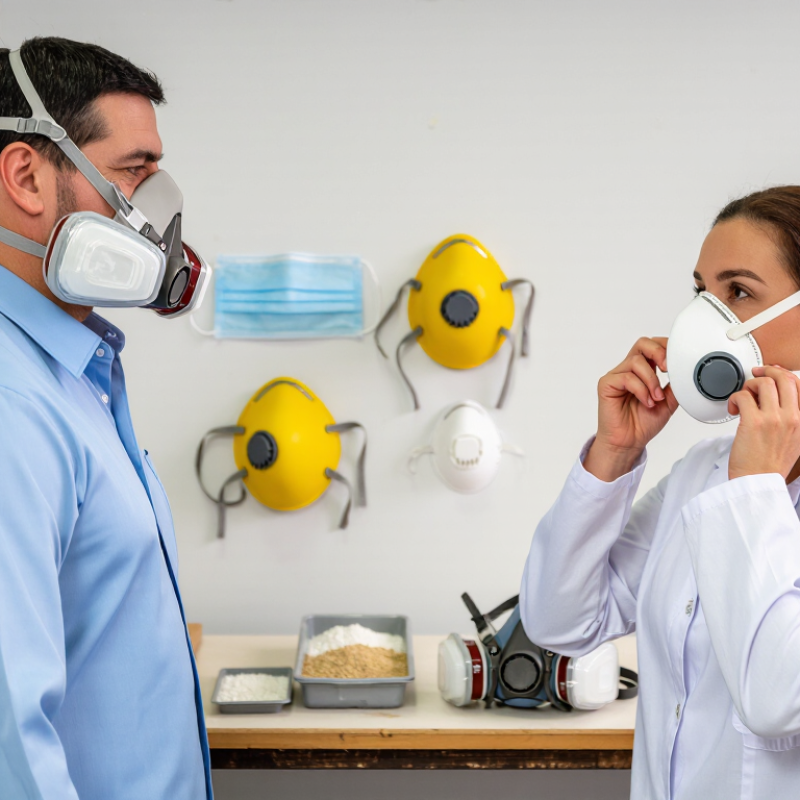
Choosing a dust mask starts with identifying what is airborne, not simply noticing a dusty room. Wood sanding may release fine particles; cutting concrete can create respirable crystalline silica. Flour, grain, and some workplace powders bring different concerns. Check product safety information and task assessments where available. A visible cloud can be a warning, but dangerous fine dust may be hard to see.
Then consider how much dust is produced, how long the task lasts, and whether ventilation controls it. A brief sweep in a ventilated space differs from hours of grinding near the source. Don’t guess from appearance alone. Exposure monitoring or advice from a qualified safety professional can help when the hazard or concentration is uncertain. A filtering facepiece is intended for particles, not gases or vapors, and the required protection depends on the dust and exposure level. Fit matters: gaps around the nose or cheeks can let contaminated air bypass the filter. Facial hair may interfere with a tight seal. It is easy to focus on the mask and overlook the task itself; reducing dust at its source may be needed too. These details are not always convenient, but they can change the right choice.
A dust mask’s rating tells you how its filter performed under a defined test, not whether it suits every job. Under NIOSH’s 42 CFR Part 84 standard, N95 filters at least 95% of test particles; N99 and N100 ratings require at least 99% and 99.97%. The N, R, and P classes also describe resistance to oil. Check the exact marking, not just the product description.
European EN 149 uses FFP1, FFP2, and FFP3 classes, with filter penetration limits of 20%, 6%, and 1%, respectively. These figures come from a different test framework, so FFP2 and N95 should not be treated as perfectly interchangeable. Standards matter. NIOSH certification and the EN 149 marking indicate different approval systems; confirm which one applies to the mask in your hand.
Fit can undermine a strong rating. CDC/NIOSH guidance emphasizes selecting a respirator for the hazard and achieving a proper seal. Try it on and check for leaks around the nose and cheeks; facial hair or a bent nose clip can leave small gaps. Small gaps count. I still find rating labels easy to misread, and a high number can feel reassuring when it should prompt another question: what dust, and under what conditions? For fine or hazardous dust, consult a workplace safety professional rather than relying on the rating alone.
Choosing a dust mask starts with the shape of your face, not the package. A cup-style mask may leave space around a narrow nose, while a folded design can sit better on some cheeks. Put it on and check the bridge, sides, and chin. Check the seal. Air should not escape in a steady stream near your eyes when you breathe out. Glasses fogging can be a clue, though it is not a precise test. Follow the mask’s instructions for checking its seal.
Fit matters during movement, too. Turn your head, look down, and speak a few sentences. If the mask shifts or a strap slips, the seal may change. Facial hair where the mask touches the skin can prevent a close fit. A tighter strap is not always the answer; it can create pressure without fixing a gap. For tight-fitting respirators used at work, follow the relevant fit-testing and safety guidance.
Comfort affects whether a mask stays in place. Notice pressure on the nose, warmth, and rubbing behind the ears after several minutes. A soft edge may feel pleasant but still fail to seal. Try different sizes or shapes, and check that breathing feels manageable for the intended task. Some discomfort takes adjustment; persistent pain or leaks deserve attention. Dust varies, and a basic mask may not suit every exposure. I would not judge protection by comfort alone.
A dust mask works only while its filter and face seal remain serviceable. Treat cleaning, reuse, and replacement as separate decisions. NIOSH’s 42 CFR Part 84 certification standard requires an N95 filter to capture at least 95% of test aerosols. That is a laboratory result, not a guarantee after washing or repeated wear. Disposable filtering facepieces should not be washed. Water and detergents can damage the filter or distort its shape. Not after washing. If you use one, check its straps and nose seal before each use, and discard it if it is wet, visibly dirty, damaged, or harder to breathe through.
Reusable respirators need a different routine. OSHA’s Respiratory Protection standard, 29 CFR 1910.134, requires cleaning and inspection according to a written program. Follow the manufacturer’s instructions for cleaning products and drying; then inspect valves, straps, and sealing surfaces under bright light. Small cracks matter. Replace damaged parts or filters that meet their stated change-out conditions. NIOSH guidance notes that particulate filters are generally replaced when damaged, dirty, or difficult to breathe through, rather than simply because a set number of days has passed. Exposure levels and manufacturer limits still matter. Keep a simple date and cleaning log near the storage container. It is easy to forget. A log helps, though it cannot replace a careful seal check.
| Mask Type | Typical Use | Cleaning Requirements | Reuse Guidance | When to Replace | Key Checks Before Use |
|---|---|---|---|---|---|
| Disposable filtering facepiece (for example, an N95-type respirator) | Particulate hazards such as dust, when the respirator is selected and used according to the hazard and applicable requirements. | Do not wash or clean with soap, solvents, or disinfectants. Moisture and cleaning agents can affect the filter or fit. | Use only as permitted by workplace rules and the respirator manufacturer. Do not share. Storage between uses should keep it clean, dry, and undamaged. | Replace if wet, visibly dirty, damaged, difficult to breathe through, or unable to seal properly. Follow any applicable use limits and workplace procedures. | Check the straps, nose area, and face seal. Perform a user seal check each time it is put on; a seal check is not a substitute for required fit testing. |
| Reusable elastomeric half-mask respirator with particulate filters | Repeated tasks involving particles, when the respirator and filters are suitable for the hazard and the wearer is properly fitted. | Remove filters as directed, then clean and disinfect the facepiece using the manufacturer’s instructions. Let it dry fully before reassembly. | The facepiece can be reused if it remains in good condition and is cleaned, inspected, and stored correctly. Do not share unless it has been properly cleaned and disinfected. | Replace filters according to the manufacturer’s instructions and workplace schedule, or sooner if damaged, contaminated, wet, or noticeably harder to breathe through. Replace the facepiece if it is cracked, distorted, or has worn straps or valves. | Inspect the facepiece, valves, straps, seals, and filter connections. Confirm that the correct filters are installed and that the respirator passes a user seal check. |
| Reusable elastomeric full-face respirator with particulate filters | Particle hazards where a compatible full-face respirator is selected; it may also provide eye protection when properly fitted and approved for the task. | Clean and disinfect the facepiece after use as directed by the manufacturer. Remove filters first if instructed, and dry all parts before storage. | Reusable only when maintained, inspected, and stored according to the manufacturer’s instructions and the respiratory protection program. | Replace filters as specified or when damaged, contaminated, wet, or breathing resistance increases. Replace the facepiece if the lens, seal, valves, or other components are damaged or no longer function correctly. | Check the lens for cracks or poor visibility, inspect the seal and valves, and verify fit. A full-face design still requires correct selection and fit testing where applicable. |
| Cloth face covering or non-certified dust mask | May help limit some nuisance dust in low-risk situations, but it is not a substitute for a certified respirator when hazardous airborne particles are present. | Wash reusable fabric coverings according to their care instructions and allow them to dry completely. Do not assume washing makes them suitable for occupational dust hazards. | Reuse only if the covering is intended to be washable and remains intact. Do not share it. | Replace if torn, stretched, heavily soiled, or unable to cover the nose and mouth securely. | Confirm that the task does not require a properly selected and fitted respirator. Fabric coverings do not provide the same verified filtration and seal as certified respirators. |
Important: Particulate respirators are not designed to protect against gases or vapors. Choose respiratory protection based on the specific hazard, follow the manufacturer’s instructions, and use a workplace respiratory protection program when required.
Choosing a mask starts with identifying the particles and conditions in your workspace. Fine sanding dust, flour, and outdoor pollen behave differently, while oil-based aerosols need a suitable filter. NIOSH states that approved N95 filters must capture at least 95% of airborne test particles under specified conditions. That rating does not make every mask right for every task.
Next, consider fit, heat, moisture, and how long you wear it. A tight-fitting mask can lose protection if it gaps at the nose or cheeks; facial hair may interfere with its seal. In hot workshops, a valve or lighter design may feel more comfortable, but comfort should not replace a proper fit. OSHA’s respiratory protection standard calls for fit testing before use and at least annually for tight-fitting respirators. A small adjustment can matter.
Tips: Check the hazard and filter label before starting. Try the mask while moving and speaking. If dust enters or breathing feels unusually difficult, stop and reassess the fit and task controls.
Fit matters most. I’ve found that a mask that feels fine at the bench may shift when you bend over. Don’t assume.