China Top 10 Floor Mat Carpet Manufacturers for Global Buyers
Choosing a dependable Floor Mat Carpet manufacturer involves more than comparing prices or browsing polished product photos. Global buyers must assess fiber quality, backing stability, edge binding, production capacity, and communication. A sample may look dense under showroom lights, yet flatten quickly beneath a busy entrance. Small tests matter.
Flooring procurement consultant Maya Chen puts the buying principle this way: “A mat earns trust through performance underfoot, not promises on a product sheet.” Buyers should request material specifications, construction details, and samples for realistic evaluation. Check whether the surface sheds, the backing grips the intended floor, and the edges remain tidy after repeated use. Ask how suppliers manage custom dimensions, color matching, packaging, and lead times. These practical details often reveal more than a glossy catalogue.
This guide introduces ten Chinese manufacturers for global buyers, with attention to product range, manufacturing strengths, and sourcing considerations. The right shortlist depends on the application: a hotel lobby, retail entrance, office corridor, or residential doorway each brings different demands. Not every supplier will fit every project. Rankings can also miss important differences, since public information and buyer priorities vary. Treat the list as a starting point, then verify claims directly and compare samples against your own requirements. A careful review takes time. It can prevent costly mismatches, though no checklist guarantees a perfect order.
Understanding China’s Floor Mat and Carpet Manufacturing Industry
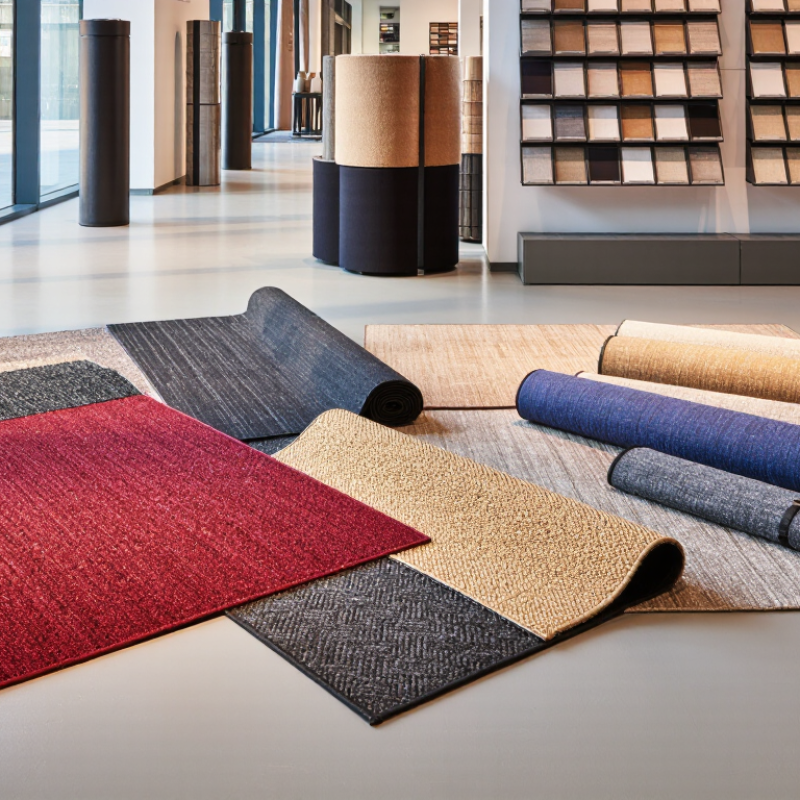
China’s floor mat and carpet manufacturing industry combines material processing, weaving, tufting, backing, and finishing across specialized production sites. Factories may use polypropylene, polyester, nylon, natural fibers, or blended yarns, depending on the product’s purpose and price target. For entry mats, buyers often compare water absorption, edge binding, backing grip, and how easily dirt releases. For area carpets, pile density, color consistency, and resistance to flattening matter.
Small details matter.
Manufacturing capacity can support custom dimensions, patterns, and packaging, but capabilities differ between suppliers and product lines. A sample is useful, yet it cannot fully represent bulk consistency; ask how color batches and backing thickness are checked. Look closely at seams, odor, curling corners, and shedding after repeated handling, not just the showroom finish. Factory audits, test reports, and clear specifications help verify claims, while written communication can prevent production misunderstandings.
No test covers everything. A sound sourcing decision weighs documented performance against price, lead time, and the supplier’s willingness to discuss defects openly.
Main Product Types and Manufacturing Processes
China’s floor mat and carpet manufacturers produce a wide range of formats for homes, vehicles, offices, and commercial entrances. Common product types include tufted carpet mats, needle-punched mats, woven rugs, PVC coil mats, and molded rubber mats. Each suits different conditions. A PVC coil surface, for example, lets dirt fall through its loops, while a rubber mat offers a heavier, firmer feel underfoot.
Manufacturing starts with material selection and preparation. For tufted mats, needles push yarn through a backing to form a pile; the pile may then be cut or left looped. Needle-punched products use barbed needles to entangle fibers into a dense layer. Woven mats are made by interlacing yarns, while PVC coil mats are typically formed by extruding plastic into continuous loops. Rubber products may be molded or vulcanized, depending on their construction. Small details matter.
Backing, edge binding, trimming, and surface finishing affect how a mat performs after repeated use. Quality checks may include measuring dimensions, checking pile or loop consistency, and testing adhesion between layers. A neat sample can still hide weak backing or uneven edges, so buyers should ask how production batches are inspected. No single construction fits every market; moisture, foot traffic, cleaning routines, and packaging needs all shape the right choice.
Key Criteria for Evaluating Chinese Manufacturers
Choosing a Chinese floor mat or carpet manufacturer requires more than comparing quoted prices. Start with the product itself: request a sample and check its weight, backing, edge finish, and surface texture. Rub the pile by hand and inspect whether fibers shed or flatten easily. Details matter. Ask for written specifications covering fiber composition, dimensions, color tolerance, and intended use. A sample is useful, but it cannot prove every production batch will match.
Evaluate the factory’s quality controls and production capacity against your order size and schedule. Ask how workers check color, dimensions, stitching, and packaging, and whether inspection records can be shared. Confirm which certificates or test reports apply to the exact product; check their dates, scope, and issuing body. Clear communication matters, too. If answers about lead times or defect handling keep changing, pause and clarify them in writing. A polished factory visit can still leave unanswered questions.
Tips: Compare samples from the same specification, not just similar-looking products. Request a pre-shipment inspection plan, confirm carton labels and packing details, and agree on how defects will be reported. Keep notes. Small oversights, such as a backing that slips on tile, can become costly after delivery.
How Global Buyers Can Select and Source Suppliers
Global sourcing for floor mats and carpets works best when buyers compare production capability, not just catalog photos. Ask suppliers for fiber composition, pile height, backing material, edge-binding details, and available dimensions. These details affect grip, wear, cleaning, and suitability for different spaces. Request a physical sample in the intended color. Screens can hide texture and shade differences.
Tips: Compare samples under the same light. Check edges for loose threads, backing for odor or uneven coating, and dimensions with a tape measure. Ask for written specifications, minimum order quantities, lead times, packing details, and current quality-test documents. Confirm which tests apply to your market and product use.
Before placing a large order, agree on an inspection plan and acceptable tolerances for color, size, and workmanship. A pre-shipment inspection can help identify problems, but it cannot guarantee every item will match perfectly. Keep approval samples and written records for later comparison. Discuss how the supplier handles defects, replacement goods, and production delays. Freight costs and packaging can change the final landed price, so compare complete quotations rather than unit prices alone. Some buyers focus too heavily on price; I would reconsider that choice when a small saving creates costly rework.