
Which TM3DQ16RG Type Is Best in 2026?
Choosing the best TM3DQ16RG type in 2026 starts with the machine, not the product label. A control panel may need compact wiring, dependable switching, or straightforward replacement. These priorities can point to different configurations, even when the model names look similar. Details matter.
This guide compares the practical factors behind a suitable choice: output requirements, connected loads, wiring method, available panel space, and compatibility with the installed controller. The TM3DQ16RG is associated with Schneider Electric’s Modicon TM3 range, but buyers should confirm the exact product variant and current specifications against official documentation. A catalogue listing alone may not show every detail that matters for an installation.
Look closely at the load type and switching frequency. Check terminal arrangements, environmental conditions, and the controller’s supported module list. Then compare purchase cost with maintenance needs and replacement availability. A lower price is not always the better value. Neither is an oversized specification. The right option should match the actual application, with enough margin for foreseeable changes.
Some recommendations online can be too confident. A model that works well in one cabinet may be unsuitable in another. I would verify part numbers and wiring details before ordering; that extra check is easy to overlook. This comparison offers a clear starting point, while treating manufacturer documentation and qualified technical review as the final references for a real project.
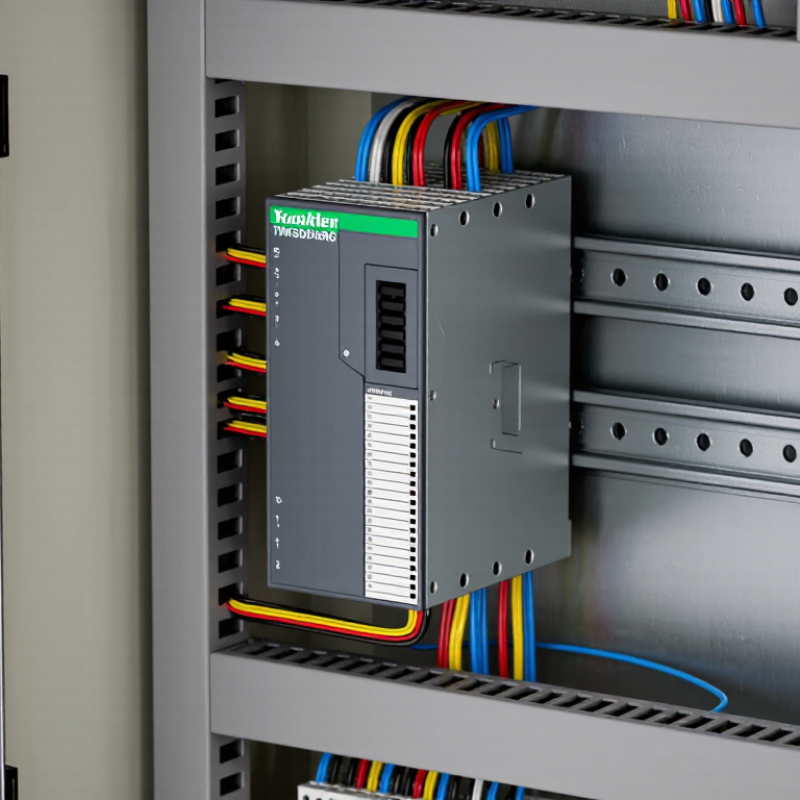
What the TM3DQ16RG Is and How It Fits the TM3 Range
The TM3DQ16RG is a 16-point relay-output expansion module in the TM3 range. It adds switched outputs to a compatible controller when its built-in I/O is not enough. Relay outputs can suit mixed loads, such as indicator lamps, small contactors, and valves, but they are not a universal fit. Check the module’s output ratings and wiring requirements against each load. A label on a cabinet door can save time later.
Within the TM3 range, output type matters as much as point count. Relay modules switch through mechanical contacts, while transistor modules are generally better suited to frequent, rapid switching of compatible DC loads. The best choice depends on load voltage, switching frequency, isolation needs, and the controller’s supported expansion capacity. Compatibility can vary by controller model and system configuration, so confirm the relevant documentation before ordering. “Sixteen points” sounds generous, but unused outputs do not justify a mismatch.
Tips: List each load’s voltage and current, then mark how often it switches. Leave room in the power and output budget for future additions. I would also verify terminal layout before installation; it is an easy detail to overlook.
Which TM3DQ16RG Type Is Best in 2026? - What the TM3DQ16RG Is and How It Fits the TM3 Range
| Selection dimension | TM3DQ16RG | Alternative output type | Best fit |
|---|---|---|---|
| Module function | Discrete output module for controlling on/off devices from a compatible controller system. | Other discrete output modules may use relay or semiconductor switching, with different channel counts and electrical characteristics. | Choose by the load type, required number of outputs, and the controller’s supported module list. |
| Output technology | Relay outputs use mechanical contacts. They can switch AC or DC loads only when the load falls within the module’s specified ratings. | Transistor outputs use semiconductor switching and are generally intended for DC loads. | Relay outputs suit applications needing contact switching; transistor outputs are often preferable for frequent or faster switching. |
| Number of outputs | 16 discrete output channels. | Modules in the wider range may offer different channel counts and output configurations. | For a 16-point requirement, check that the required number of independently controlled loads can be connected within the module’s wiring and grouping limits. |
| Switching frequency and service life | Mechanical relay contacts have finite electrical and mechanical life; switching frequency and load characteristics affect contact life. | Transistor outputs have no mechanical contacts and are commonly selected for high switching frequency, subject to their own electrical limits. | Use relay outputs for suitable, less frequent switching; consider transistor outputs for repetitive, rapid switching. |
| Load compatibility | Check the official ratings for the applicable AC or DC voltage, current, load type, and output grouping before wiring. | Transistor output ratings typically specify DC voltage, current, and output polarity or switching arrangement. | Match the output type to the actual load, including inrush current and any inductive-load suppression requirements. |
| Typical application | On/off control of compatible actuators, indicators, or other field devices within the module’s rated limits. | Fast DC control, such as applications requiring frequent switching, may favor a transistor-based module. | Confirm that the application’s switching rate and load characteristics are appropriate for the chosen output technology. |
| Compatibility and installation | Verify controller compatibility, terminal arrangement, wiring method, environmental limits, and required accessories against the exact product documentation. | Other modules may differ in terminal style, power requirements, channel grouping, and installation constraints. | Check the controller hardware version and system configuration before selecting or replacing a module. |
| 2026 selection guidance | A suitable choice when a compatible system needs 16 relay-based discrete outputs and the connected loads meet the documented ratings. | A different relay or transistor output module may be more suitable when channel count, switching speed, or load requirements differ. | There is no universally best type: select by verified ratings, application needs, and current availability. |
Important: Electrical ratings, terminal details, compatibility, and product availability can vary by exact model and revision. Confirm them in the current technical documentation before installation or replacement.