
How to Choose the Right Tire Valve Sensor?
Choosing the right tire valve sensor is more than matching a part number online. The sensor must communicate with your vehicle’s tire pressure monitoring system, or TPMS, without creating false warnings. A reliable choice begins with the vehicle’s make, model, year, wheel type, and original sensor frequency. Check the manufacturer’s fitment data carefully. Small differences matter.
Look closely at the valve stem, sealing washer, battery condition, and sensor housing. Metal stems suit many alloy wheels, while rubber versions may suit specific applications. The sensor should tolerate road vibration, moisture, temperature changes, and repeated pressure checks. It should also support the correct relearn or programming procedure. Some vehicles learn automatically. Others require a scan tool or a defined driving sequence.
Do not trust appearance alone.
In practical service work, installation errors often resemble sensor failure. An overtightened nut can damage the seal. A poorly seated washer can cause a slow leak. I have also found that inexpensive sensors may work initially but provide uncertain battery life or inconsistent communication. That does not make every budget option unsuitable. It does mean the supplier’s testing records, warranty, and technical support deserve attention.
A dependable tire valve sensor should match verified vehicle data and the wheel assembly. Confirm compatibility before removing the old unit. After installation, test all four tires, clear relevant faults, and check for leaks with soapy water. A short road test can reveal problems that a stationary scan misses. Still, no guide replaces the vehicle’s service information. Recheck the details when uncertain.
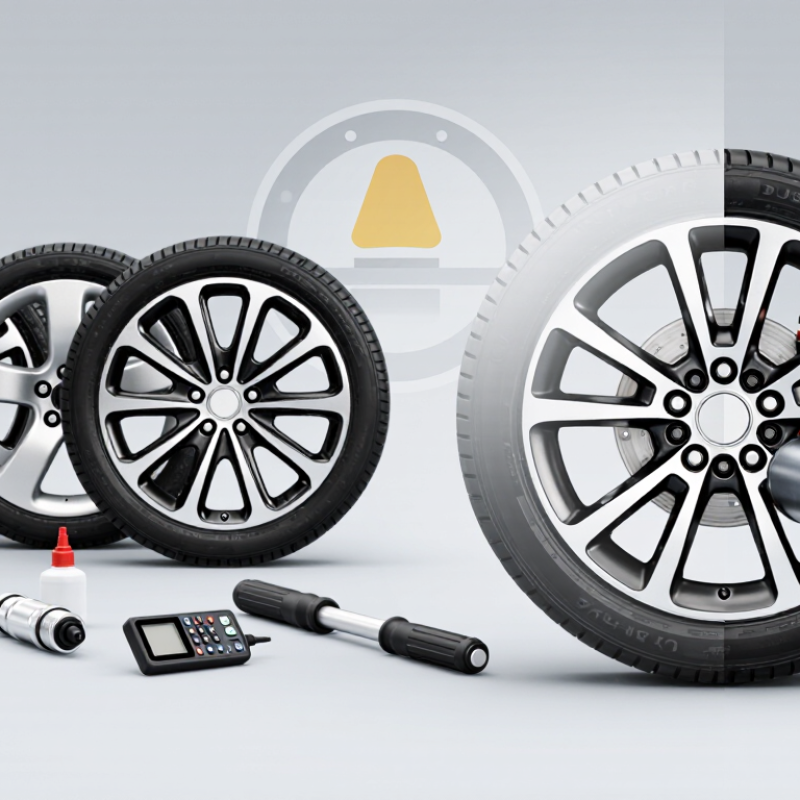
Define the Sensor Type: Direct TPMS Measures Pressure; Indirect TPMS Uses ABS Data
Choosing the right tire valve sensor starts with understanding the monitoring method. Direct TPMS measures air pressure inside each tire through a valve-mounted sensor. It may also track temperature. That difference matters.
A direct system can identify which tire is losing pressure, making a slow leak easier to investigate. It is especially practical for drivers who regularly tow, travel long distances, or want live pressure readings. Installation requires the correct valve fit, sensor pairing, and a reliable seal. A poorly tightened valve may create a leak that looks like a sensor failure. That detail is easy to miss.
Indirect TPMS uses ABS data instead of measuring pressure directly. When a tire loses air, its rolling radius changes, and the wheel rotates differently. The vehicle compares wheel speeds and estimates a pressure problem. No pressure reading appears. Indirect systems use fewer components at the wheels, but calibration becomes important after inflation or tire rotation. A reset may be required on level ground. Equal pressure loss across several tires can also confuse the system. No system is perfect.
Consider vehicle compatibility, valve dimensions, temperature range, battery life, and the relearn process before buying. Technicians often verify pressure with a calibrated gauge before replacing any sensor. The warning may reflect low pressure, a damaged valve, or incorrect calibration. Sensor data supports inspection; it does not replace it.
How to Choose the Right Tire Valve Sensor? - Define the Sensor Type: Direct TPMS Measures Pressure; Indirect TPMS Uses ABS Data
| Selection Dimension | Direct TPMS | Indirect TPMS | What to Check Before Choosing |
|---|---|---|---|
| Measurement Method | Uses a pressure sensor installed inside each wheel, commonly integrated with the tire valve. | Uses the vehicle’s anti-lock braking system wheel-speed sensors to detect changes in tire rolling behavior. | Confirm the vehicle’s original TPMS design and select a replacement system with the same operating principle. |
| Information Provided | Can report the pressure of individual tires. Many systems also transmit tire temperature and sensor status. | Usually identifies a pressure-loss condition rather than directly displaying the actual pressure of each tire. | Choose direct TPMS when individual tire pressure values are required. |
| Typical Detection Performance | Can detect pressure changes directly and generally provides more precise tire-by-tire information. | Detects pressure differences by comparing wheel-speed behavior; gradual or evenly distributed pressure loss may be harder to identify. | Consider direct TPMS for vehicles requiring detailed pressure monitoring or faster pressure-change indication. |
| Sensor Location | Mounted inside the tire, either on the valve stem or attached to the wheel. | No pressure sensor is installed inside the tire; the system relies on existing wheel-speed sensors. | For direct sensors, verify valve-stem design, wheel compatibility, mounting method, and sealing components. |
| Power Source | Normally uses an internal battery. The battery is generally sealed and is not intended to be replaced separately. | Uses the vehicle’s existing electronic control system and wheel-speed sensors, so no in-wheel TPMS battery is required. | For direct TPMS, check battery condition and expected service life before installation. |
| Maintenance Requirements | May require sensor replacement, valve-core inspection, sealing-grommet replacement, and sensor relearning after wheel service. | Normally requires tire-size calibration or a system reset after correcting pressure, rotating tires, or changing wheel assemblies. | Follow the vehicle service procedure after any tire, wheel, or suspension-related work. |
| Wheel or Tire Replacement | Additional sensors may be needed when using a second wheel set. Sensor IDs may need to be learned by the vehicle. | Usually does not require an additional in-wheel sensor when changing wheel sets, but calibration may be required. | Ask whether the replacement wheels include compatible sensors and whether the vehicle supports automatic or manual relearning. |
| Spare-Tire Monitoring | A full-size spare can be monitored only if it contains a compatible sensor and the vehicle supports monitoring that position. | Monitoring depends on wheel-speed behavior and normally does not measure a parked spare tire directly. | Check the owner’s manual if the spare tire must be included in the monitoring system. |
| Temperature Information | Some direct sensors can measure and transmit tire temperature in addition to pressure. | Does not directly measure tire pressure or tire temperature. | Select a direct sensor only when temperature data is supported by the vehicle and required for the application. |
| Installation Complexity | Requires tire removal or professional mounting to install the sensor safely and prevent air leaks. | No in-tire sensor installation is normally required; calibration is performed through the vehicle controls or diagnostic procedure. | Consider available tools, technician skill, and access to a TPMS programming or relearning tool. |
| Compatibility Factors | Must match the vehicle’s frequency, communication protocol, valve design, pressure range, and sensor configuration. | Must be supported by the vehicle’s ABS and electronic control software; a standard valve sensor is not required. | Use the vehicle identification information and service specifications rather than selecting by appearance alone. |
| Best Choice When | Individual pressure readings, direct measurement, and detailed tire-status information are priorities. | Simple system architecture, lower in-wheel maintenance, and compatibility with the factory indirect system are priorities. | Choose the sensor type that matches the vehicle’s factory system; direct and indirect systems are not interchangeable by default. |
Related Posts
-
What is a Tire Monitor Sensor and How Does It Work?
-

2026 How to Choose the Best TPMS Kit for Your Vehicle?
-
Top 10 Tips for Maintaining Your TPMS Sensors for Optimal Performance
-

Why Is My Tire Monitor Sensor Not Working?
-
What is tire tpms and how does it work in your vehicle?
-
10 Best Tire TPMS Sensors for Global Buyers?