
How to Find China Top Tire Service Suppliers?
Finding China’s top tire service suppliers requires more than comparing factory prices. It requires evidence, technical judgment, and careful supplier verification.
The global tire market reached approximately USD 245.53 billion in 2023, according to Grand View Research’s 2024 industry report. The United States Tire Manufacturers Association also reported more than 330 million replacement tires sold annually in the U.S. market. These figures reveal strong demand, but they do not prove that every supplier can deliver reliable tire service. A low quotation may hide weak technician training, inconsistent equipment, or limited after-sales support.
Michelin CEO Florent Menegaux has stated, “The tire is the only point of contact between the vehicle and the road.” That single connection deserves serious attention. When evaluating Chinese suppliers, buyers should examine service coverage, tire-changing equipment, balancing accuracy, emergency response, spare-parts availability, and warranty procedures. ISO certification helps, but it is not enough. Ask for inspection records, technician credentials, customer references, and a live demonstration.
Details matter. Can the supplier respond when a fleet vehicle stops beside a wet highway at midnight? Can it document torque settings and repair limits? Can it communicate clearly across languages and time zones?
Not every ranking is clean. Some supplier websites look impressive but provide little operational proof. Buyers can also overvalue factory scale and undervalue local service capability. A reliable shortlist should combine public data, independent audits, sample orders, and direct customer feedback. This approach is slower, but it reduces costly surprises and supports safer, more dependable tire service partnerships.
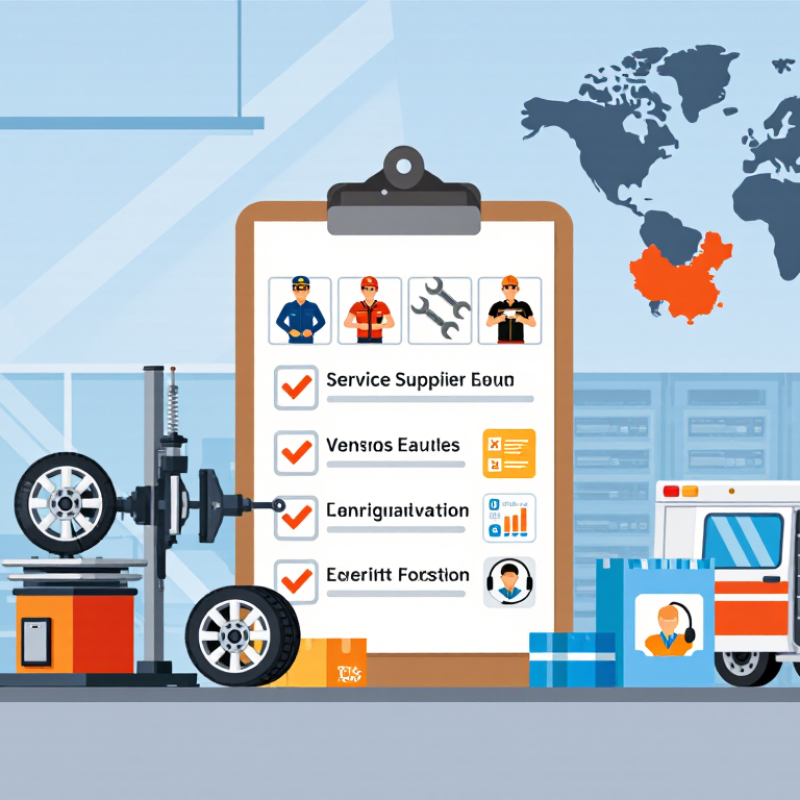
Define Your Tire Service Requirements and Supplier Criteria
Before contacting China’s top tire service suppliers, define the work precisely. Record vehicle types, tire sizes, load ratings, seasonal conditions, and monthly service volume. Include mounting, balancing, alignment, rotation, puncture repair, and TPMS inspection. Electric vehicles need extra attention. The International Energy Agency reported nearly 14 million electric car sales worldwide in 2023, increasing demand for EV-capable equipment and trained technicians.
Build measurable supplier criteria around safety and consistency. Ask for calibration records, technician training evidence, inspection procedures, warranty terms, and spare-parts availability. The European Tyre and Rim Technical Organisation emphasizes correct load, speed, pressure, and rim compatibility. Your supplier should document these checks, not merely promise quality. Request sample service reports with torque values, inflation pressure, tread depth, and before-and-after alignment readings.
Visit the workshop if possible. Watch how technicians protect rims and store tires. Check whether digital records match physical work orders. U.S. National Highway Traffic Safety Administration guidance links proper tire inflation with safer handling and better efficiency, so pressure control deserves a clear acceptance standard. Some requirements may be unrealistic at first. I once treated low price as a useful filter, but it hid training and response-time gaps. Revise the scorecard after a trial order.
How to Find China Top Tire Service Suppliers? - Define Your Tire Service Requirements and Supplier Criteria
A practical screening matrix for comparing tire service suppliers before requesting quotations or conducting audits.
| Evaluation Dimension | Requirement to Define | Recommended Screening Benchmark | Evidence to Request | Priority | Suggested Score |
|---|---|---|---|---|---|
| Service Scope | Specify whether the supplier must provide tire fitting, wheel balancing, wheel alignment, puncture repair, tire rotation, TPMS service, roadside assistance, or fleet maintenance. | Supplier can deliver every service required for the target vehicle types and operating conditions. | Detailed service catalogue, workshop photographs, equipment list, and technician qualification records. | High | 0–10 points |
| Vehicle Compatibility | Define supported passenger cars, light commercial vehicles, trucks, buses, agricultural vehicles, or off-road vehicles. | Documented capacity for the required wheel diameters, tire sizes, axle loads, and vehicle categories. | Vehicle and tire-size coverage matrix; maximum lifting capacity; equipment operating range. | High | 0–10 points |
| Technical Equipment | Confirm the availability of tire changers, wheel balancers, alignment systems, torque tools, bead-seat equipment, and TPMS diagnostic tools. | Equipment is suitable for the intended tire sizes and is maintained and calibrated according to manufacturer instructions. | Equipment inventory, calibration certificates, maintenance logs, and recent service records. | High | 0–10 points |
| Installation Quality | Set requirements for correct mounting direction, bead seating, valve replacement, wheel-nut tightening, and final inspection. | Written work instructions include torque control, leak testing, visual inspection, and post-service verification. | Standard operating procedures, inspection checklists, sample service reports, and corrective-action records. | High | 0–10 points |
| Wheel Alignment | Define whether two-wheel or four-wheel alignment is required and identify acceptable measurement and adjustment tolerances. | Alignment reports show before-and-after readings for camber, caster, toe, and steering-angle measurements where applicable. | Sample alignment reports, alignment-equipment calibration records, and technician training documents. | High | 0–10 points |
| TPMS Capability | Determine whether the supplier must inspect, reset, program, replace, or diagnose direct and indirect tire-pressure monitoring systems. | Technicians can identify sensor faults, perform relearn procedures, and document system status after service. | TPMS tool list, training certificates, diagnostic workflow, and sample completion records. | Medium | 0–8 points |
| Safety and Compliance | Require safe lifting, wheel restraint, inflation, personal protective equipment, waste handling, and emergency procedures. | Written health-and-safety procedures are implemented and regularly reviewed; applicable local regulations are followed. | Safety policy, risk assessments, training logs, incident records, and workshop audit results. | High | 0–10 points |
| Quality Management | Assess how the supplier controls service consistency, nonconformities, customer complaints, and corrective actions. | A documented quality process exists, with traceable service records and measurable corrective-action follow-up. | Quality manual, audit reports, complaint statistics, process KPIs, and corrective-action examples. | High | 0–10 points |
| Response and Availability | Define required operating hours, emergency coverage, appointment capacity, and response expectations for urgent cases. | Supplier confirms service hours, escalation contacts, booking process, and realistic response targets in writing. | Service-level proposal, duty roster, dispatch process, and historical response-time data. | Medium | 0–8 points |
| Geographic Coverage | Identify the cities, provinces, ports, distribution centers, or fleet routes that require service support. | Supplier has owned facilities or verified service partners in the required locations, with consistent procedures. | Service-location list, coverage map, partner-management process, and regional contact information. | Medium | 0–8 points |
| Pricing Structure | Separate labor, equipment use, emergency call-out, travel, consumables, disposal, and after-hours charges. | Quotation is itemized, valid for a stated period, and clearly identifies taxes, exclusions, and possible surcharges. | Official quotation template, rate card, payment terms, and examples of additional-cost conditions. | Medium | 0–8 points |
| Warranty and Liability | Define responsibility for workmanship defects, damaged wheels or sensors, incorrect installation, and repeat service. | Written warranty terms state coverage, exclusions, claim procedure, response time, and liability limits. | Service warranty policy, insurance information, claims procedure, and sample resolution records. | High | 0–10 points |
| Documentation and Traceability | Require service records containing vehicle identification, tire position, tire size, mileage, work performed, torque data, and inspection results. | Every completed job produces a searchable record that can be linked to a vehicle, work order, and technician. | Blank work-order form, digital reporting example, data-retention policy, and sample monthly service report. | High | 0–10 points |
| Environmental Practices | Evaluate storage and disposal of used tires, used valves, damaged sensors, lubricants, and other service waste. | Waste is stored safely and transferred through legally authorized collection or recycling channels where required. | Waste-management procedure, transfer records, storage photographs, and recycling or disposal documentation. | Medium | 0–6 points |
| Communication and Reporting | Set requirements for English-language communication, quotation clarity, technical escalation, and periodic performance reporting. | Supplier provides a designated account contact and delivers accurate reports within the agreed reporting cycle. | Communication workflow, sample reports, escalation chart, and response-history records. | Medium | 0–6 points |
| Trial-Service Verification | Use a controlled pilot order before approving long-term cooperation. | Pilot service meets agreed quality, timing, documentation, safety, and invoicing requirements without unresolved major issues. | Pilot evaluation form, completed work order, customer feedback, inspection results, and final corrective-action review. | High | 0–10 points |
Related Posts
-

What Is Tire Service A Global Buyers Guide?
-
Best Tire Air Pressure Tips for Optimal Performance
-
What is a Tire Monitor Sensor and How Does It Work?
-
2026 Top Tire TPMS Sensor Trends and Innovations Are You Ready?
-

Top 5 TPMS Service Kit Solutions for Global Buyers?
-
Top 10 Tire Pressure Monitoring System Suppliers?