Top 10 Types of Tire Valve Caps for Every Vehicle

A tire valve cap is easy to overlook: a small part on a wheel that may face rain, road grit, and repeated inflation checks. Yet the right cap can help keep dirt and moisture away from the valve opening. It cannot repair a damaged valve or replace regular tire-pressure checks. Small detail. Real maintenance.

This guide compares ten types of tire valve caps for different vehicles, from compact cars to trucks and motorcycles. It considers practical differences, including material, fit, sealing design, weight, and visibility. Plastic caps are light and simple. Metal styles feel sturdier, but a poor fit or corrosion can make removal difficult. The useful choice depends on the valve stem, driving conditions, and routine care—not appearance alone. A bright cap may be easier to spot in a dim garage, while a plain one can be easier to match and replace.

[Insert a verified tire-service expert’s name] offers this reminder: “[Add a confirmed quotation about checking valve caps and tire pressure.]” That attribution should be verified before publication; a made-up quote would weaken a maintenance guide. The rankings ahead are a starting point, not a universal verdict. Check the cap’s compatibility, inspect it during pressure checks, and replace it if it cracks, loosens, or goes missing. Even then, caps are easy to forget. That is worth admitting.
Top 10 Types of Tire Valve Caps for Every Vehicle

Valve Cap Functions, Components, and Common Design Features

A tire valve cap protects the valve core from grit, water, and road salt; it is not the tire’s primary air seal. Common designs include lightweight plastic domes, knurled metal caps, and sealed caps with an internal rubber gasket. Their parts are simple: a threaded shell, a grip surface, and sometimes a gasket or pressure indicator. Small part. Important job. A cap should screw on easily and sit snugly, not be forced onto damaged threads. Metal caps can corrode or seize on some valve stems, so use the cap type specified for the stem or sensor.

The U.S. National Highway Traffic Safety Administration reported that vehicles with tire-pressure monitoring systems were 55.6% less likely to have a severely underinflated tire than vehicles without them. This supports checking tire pressure regularly, but a monitoring system does not make valve caps unnecessary. Remove each cap during pressure checks, inspect for dirt or cracks, and replace missing caps promptly. Indicator caps can show pressure changes visually, but they do not replace a gauge. A cap cannot repair a leaking core. It is easy to overlook this small component; that is exactly why routine checks matter.

Standard Plastic, Rubber-Sealed, and Metal Valve Caps

Tire valve caps look minor, but they help keep dust, grit, and moisture away from the valve core. The core, not the cap, normally holds tire pressure. A missing cap may not cause an immediate leak, yet dirt can complicate later inflation or servicing.

Standard plastic caps are light, inexpensive, and simple to replace. They suit everyday cars, bicycles, and many trailers. Their threads are easy to turn by hand, even in cold weather. But plastic can crack after years of sun exposure or rough handling. Check that each cap is present during routine tire inspections. It takes seconds.

Rubber-sealed caps add a small gasket that can create a closer fit and help block water and fine debris. They may be useful in wet, dusty, or frequently washed conditions. The seal can flatten or wear, so inspect it rather than assuming it lasts forever. Metal caps feel sturdy and resist everyday knocks, though material compatibility matters. Some can corrode or seize on certain valve stems, especially when exposed to road salt. Choose a compatible cap, tighten it gently, and avoid using tools. A cap should come off without a struggle. If one sticks, forcing it may damage the stem.

Top 10 Types of Tire Valve Caps for Every Vehicle - Standard Plastic, Rubber-Sealed, and Metal Valve Caps

# Valve Cap Type Typical Construction Key Features Suitable Uses Practical Notes
1 Standard Plastic Cap Molded plastic, commonly polypropylene Lightweight, inexpensive, and easy to remove by hand; helps keep dirt and moisture away from the valve opening. Everyday cars, motorcycles, bicycles, and many light vehicles with standard Schrader valves. Provides basic protection. Check that the cap is threaded securely, but do not overtighten it.
2 Rubber-Sealed Plastic Cap Plastic body with a flexible rubber or elastomer sealing insert The insert can provide a closer seal and help limit water and debris entry. Daily drivers and vehicles regularly exposed to rain, road spray, or dusty conditions. Inspect the insert for cracks, flattening, or missing pieces when checking tire pressure.
3 O-Ring-Sealed Metal Cap Metal shell with a rubber or elastomer O-ring inside Combines a durable outer body with a replaceable-style sealing element in some designs. Drivers seeking a more robust cap for regular road use. Make sure the O-ring is present and in good condition. Avoid overtightening, which can make removal difficult.
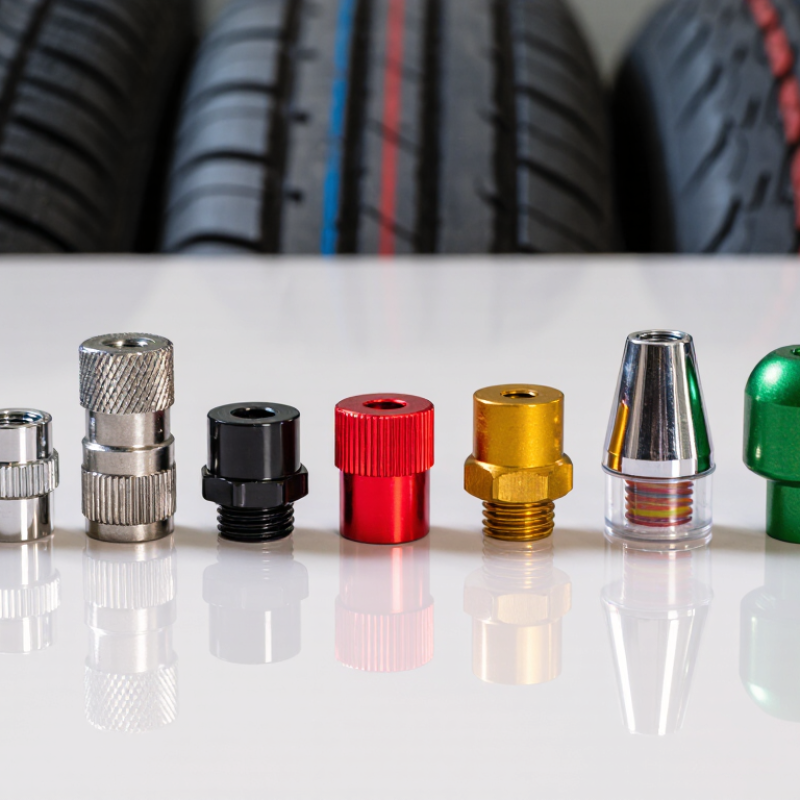
4 Aluminum Cap Lightweight aluminum alloy Light and available in a range of finishes; often selected for appearance as well as basic protection. Passenger vehicles and motorcycles where a lightweight metal cap is preferred. Metal caps can corrode or seize in some conditions. A nonmetallic sealing insert and periodic inspection can help reduce problems.
5 Brass Cap Brass body, sometimes with a sealing insert Solid construction and good resistance to ordinary handling and weather exposure. Cars, trailers, and other vehicles using compatible Schrader valve stems. Check stem and cap compatibility. Keep threads clean and avoid excessive tightening.
6 Stainless-Steel Cap Stainless-steel body, sometimes fitted with an internal seal Durable construction and strong resistance to many forms of surface rust. Vehicles frequently used in wet or outdoor environments. Confirm that the cap fits the valve stem and has an effective seal; metal construction alone does not guarantee an airtight fit.
7 Protective Metal Cap with Liner Metal outer shell with a plastic or rubber inner liner The liner separates the metal shell from the valve stem and can help reduce corrosion or sticking. Drivers who prefer a metal finish but want an added barrier between the cap and stem. Check the liner periodically for wear and remove the cap during routine tire-pressure checks.
8 Locking Valve Cap Cap with a small locking mechanism or tool-operated design Can discourage casual removal or tampering; generally requires a matching tool or key. Vehicles parked in shared, public, or otherwise exposed locations. Keep the removal tool accessible. A locking cap does not replace regular pressure checks or protect against all forms of damage.
9 Pressure-Indicator Cap Cap containing a pressure-responsive indicator, commonly using a color or position change Offers a quick visual indication when pressure is outside its preset range. Drivers who want an at-a-glance check between manual inspections. Indicator ranges vary, and the cap is not a substitute for checking pressure with a reliable gauge against the vehicle placard.
10 Extended-Reach Cap Longer cap or extension designed to reach a recessed or less accessible valve Makes access easier when wheels, hub covers, or paired-wheel layouts make a standard cap difficult to reach. Some trucks, trailers, and vehicles with recessed or closely spaced valve locations. Use only a compatible design and check that it does not contact nearby wheel parts or interfere with a tire-pressure monitoring sensor.

Brass, Aluminum, Chrome, and Locking Valve Caps

Brass, aluminum, chrome, and locking tire valve caps protect the valve core from grit and moisture. They are not substitutes for pressure checks. The U.S. Department of Energy’s FuelEconomy.gov says properly inflated tires can improve gas mileage by up to 3%. A sound cap helps keep the valve area cleaner, but it cannot correct a leak. Small part. Real limits.

Brass caps suit everyday vehicles because they resist corrosion and feel sturdy in the hand. Aluminum caps are light, though their threads can be less forgiving if overtightened. Chrome-plated caps add a bright finish; inspect the plating for chips, especially after winter driving. Locking caps can deter casual removal, but they need a matching key and add a small inconvenience during pressure checks. A cap is easy to overlook, and its benefits are easy to overstate.

Tips: Choose caps with an internal seal, hand-tighten them, and avoid forcing mismatched threads. Check tire pressure monthly; NHTSA guidance notes tires can lose about 1 psi per month. Recheck after sharp temperature changes. If a cap sticks, remove it gently and inspect the valve stem rather than reaching for pliers.

TPMS-Compatible, Pressure-Indicator, and LED Valve Caps

TPMS-compatible valve caps are designed to fit without disturbing a tire-pressure monitoring system. Still, “compatible” should not be assumed. Check your vehicle manual or sensor specifications, especially if the sensor is built into the valve stem. A cap that is too tight or has the wrong seal can make routine removal frustrating. Choose a secure, corrosion-resistant cap, and hand-tighten it gently. Small parts matter.

Pressure-indicator caps use colored bands or windows to suggest whether tire pressure is within a preset range. They can make a quick walk-around check easier: a glance may show that one tire needs attention. But they are not precision gauges. Temperature changes, worn seals, and broad indicator ranges can affect what you see. Use a reliable pressure gauge and compare readings with the vehicle’s recommended pressure, usually listed on the door-jamb label. The indicator is a prompt, not proof.

LED valve caps add visibility, often lighting when the wheel turns. They may help make a moving vehicle more noticeable at night, but brightness and battery life vary. Extra weight and bulky designs can also be inconvenient. That trade-off is easy to miss. Keep caps clean, check that they remain secure, and avoid treating any cap as a substitute for regular tire inspections.

Choosing Caps for Different Vehicles and Driving Conditions

Choosing a valve cap starts with the stem and driving conditions, not appearance. For passenger cars, a snug plastic cap is lightweight and resists corrosion. On TPMS-equipped wheels, follow the stem or sensor maker’s guidance; certain metal caps can corrode or seize on metal stems. The cap keeps grit and moisture away from the valve core, but it cannot repair a leak.

For motorcycles and bicycles, choose a compact cap that stays secure through vibration and frequent wheel checks. Work trucks and trailers benefit from sturdy caps that are easy to grip with gloves. On dusty roads, a sealed cap helps keep debris out; in winter, check that moisture has not frozen around the valve. A pressure-indicator cap can be a quick visual cue, not a substitute for a gauge. Easy to forget.

Pressure matters more than cap style. The U.S. Department of Energy’s FuelEconomy.gov estimates that properly inflated tires can improve fuel economy by up to 3%. Check pressure monthly, when tires are cold, and use the vehicle placard’s recommended value rather than the number on the tire sidewall. I would not rely on a cap to catch gradual pressure loss; a gauge gives a clearer reading, even if checking it feels like one more small chore.