
China Top TPMS Service Kit Suppliers for Global Buyers

China has become a significant sourcing base for TPMS service tools, replacement valves, sensors, and workshop accessories. For global buyers, the challenge is not finding products. It is finding suppliers that deliver consistent quality across repeated orders. A professional tpms service kit should support accurate installation, sensor replacement, valve-core service, torque control, and reliable vehicle coverage. Small parts matter. A missing grommet can delay an entire workshop job.

Kevin Rohlwing, a respected tire-service training specialist, has said, “Proper tire service is not complete until the pressure monitoring system is checked.” This principle remains practical for buyers comparing Chinese manufacturers. Experienced suppliers should provide clear compatibility lists, operating instructions, batch traceability, and responsive technical support. They should also explain whether their kit supports direct sensors, programmable sensors, or both. Vague claims deserve careful questions.

This guide examines China’s leading TPMS service kit suppliers for international purchasing teams. It considers product range, testing practices, customization, packaging, certifications, lead times, and after-sales communication. Supplier performance can look impressive during sampling. Repeat orders reveal more. Buyers should inspect valve materials, tool calibration, connector durability, and replacement-part availability before approving large volumes. A low price can still hide a costly omission. That is worth remembering.

No supplier is perfect. Even established factories may experience inconsistent communication or packaging errors. Therefore, a reliable sourcing decision should combine factory audits, sample testing, documented specifications, and realistic field feedback. The strongest partners do not merely ship a box of tools. They help workshops reduce installation mistakes, protect sensor components, and maintain dependable service quality across different markets.
China Top TPMS Service Kit Suppliers for Global Buyers

TPMS Service Kits: Definition, Components, and Global Applications

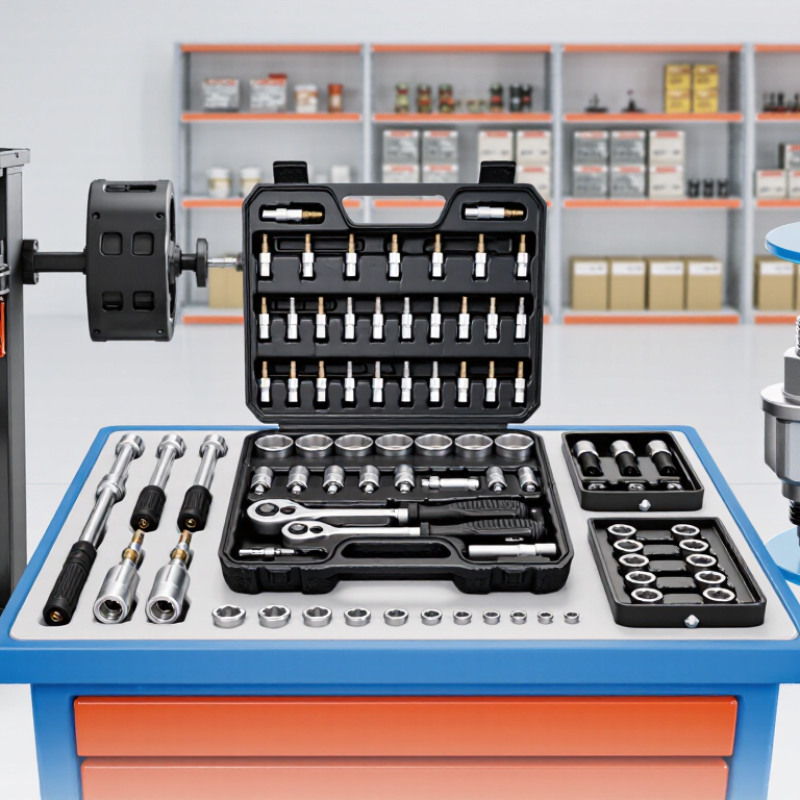
TPMS service kits are maintenance sets for tire pressure monitoring systems. TPMS stands for Tire Pressure Monitoring System. These kits support sensor replacement, valve maintenance, and leak prevention during tire service. Typical components include valve cores, sealing grommets, metal washers, retaining nuts, valve caps, and sensor screws. Some kits also include installation tools. A complete kit should match the sensor structure and valve material.

During tire replacement, technicians inspect the valve area for corrosion, deformation, and damaged seals. The correct torque matters. An overtightened nut may deform the grommet. A loose nut may create a slow air leak. These risks make accurate fitment and clear installation instructions essential. Global applications include passenger cars, commercial vehicles, fleet maintenance, and vehicles operating in cold or humid climates. China-based suppliers can support international buyers with various thread sizes, rubber compounds, packaging formats, and documentation.

Reliable sourcing requires more than a low unit price. Buyers should request material specifications, dimensional drawings, sample kits, inspection records, and compatibility data. Batch traceability also helps when quality issues appear after delivery. Not every kit fits every sensor. Workshop feedback shows that small differences in valve length can cause installation problems. Compatibility charts may contain gaps, especially for older vehicle systems. That weakness deserves review. Practical testing under heat, vibration, and repeated inflation provides stronger evidence than appearance alone. Clear labeling reduces errors when technicians handle several kits together.
China Top TPMS Service Kit Suppliers for Global Buyers

TPMS Service Kits: Definition, Components, and Global Applications

A typical single-wheel TPMS service kit replaces the consumable sealing hardware used when servicing a sensor valve. The standard configuration commonly includes one valve core, valve cap, sealing grommet, retaining nut, and washer. Exact contents vary by sensor design, vehicle application, and regional service requirements. These components are used across passenger cars, light commercial vehicles, and other road vehicles worldwide.

China’s Role in the TPMS Service Kit Supply Chain

China has become a major hub in the TPMS service kit supply chain. Its manufacturers supply valve stems, seals, valve cores, nuts, caps, and installation tools. Many factories support small trial orders and large production runs. This flexibility helps distributors manage changing vehicle applications.

Reliable suppliers usually combine engineering support with controlled production. A capable factory checks rubber hardness, thread accuracy, metal finish, and sealing performance. Batch numbers should connect components with inspection records. Packaging also matters. Moisture-resistant bags and labeled trays can prevent mixed parts during overseas transport. However, not every supplier offers the same consistency. Buyers should verify factory capacity, testing procedures, material documents, and replacement policies before placing regular orders.

Tips: Request samples from several suppliers. Test valve sealing after repeated installation. Check torque instructions with real workshop tools. Ask for a current compatibility list, but do not trust it blindly. Vehicle applications can change, and an outdated table may cause costly returns. A clear purchase specification should include materials, dimensions, tolerances, packaging, and inspection standards. Small details matter. Good communication matters too. Even experienced buyers may overlook cap fit or seal aging. That is worth reviewing.

Key Criteria for Evaluating Chinese TPMS Kit Suppliers

Chinese TPMS service kit suppliers should be evaluated through evidence, not attractive catalog images. The U.S. NHTSA estimated that mandatory tire-pressure monitoring could save about 660 lives and prevent 33,000 injuries annually. This safety impact makes sensor accuracy, valve strength, and sealing performance essential buying criteria. Ask suppliers for test records covering pressure deviation, temperature changes, battery life, and repeated valve installation.

Compatibility is equally important. A capable supplier should provide an updated vehicle-application database, clear frequency specifications, relearn instructions, and documented OE-equivalent testing. Confirm whether each kit includes sensors, valves, seals, cores, nuts, and service tools. Missing small parts can delay a workshop shipment. I have learned that “universal” often needs careful checking.

Quality systems deserve direct verification. Request ISO 9001 records, batch traceability, incoming-material controls, and sample inspection reports. The NHTSA’s FMVSS 138 framework also shows why low-pressure warning performance must be tested consistently. Market research reports from Grand View Research project continued growth in the global TPMS market, increasing pressure on suppliers to support stable production and international logistics. However, forecasts are not proof of factory capability. Conduct a video audit, test random samples, and review failure rates from recent shipments. No audit is perfect. That weakness should be acknowledged. Clear warranty terms, responsive technical support, and replacement-part availability may matter more than the lowest quotation.

China Top TPMS Service Kit Suppliers for Global Buyers - Key Criteria for Evaluating Chinese TPMS Kit Suppliers

Evaluation Dimension What Global Buyers Should Check Recommended Benchmark Verification Evidence Suggested Weight
Product Coverage Range of TPMS service items, including valve cores, seals, nuts, grommets, caps, sensors, mounting tools and replacement components. A complete service-kit range should cover the buyer's target vehicle applications and common valve configurations. Product catalogue, application list, technical drawings and sample-kit inspection. 12%
Vehicle and Sensor Compatibility Compatibility with direct TPMS sensor types, valve stems, wheel designs and regional vehicle applications. Every kit should have clearly defined part dimensions, thread specifications, materials and application references. Compatibility matrix, dimensional drawings, sample fitting test and engineering confirmation. 14%
Material Quality Material suitability for components exposed to air pressure, moisture, road salt, temperature changes and wheel-service chemicals. Metal parts should have corrosion-resistant construction; rubber parts should be suitable for automotive sealing applications. Material declaration, coating information, supplier certificates and corrosion or aging test reports. 12%
Dimensional Accuracy Consistency of thread size, sealing surfaces, valve-hole fit, component thickness and assembly tolerances. Critical dimensions should conform to approved drawings and applicable automotive service requirements. Inspection records, calibrated measuring equipment, control plans and first-article inspection reports. 12%
Pressure and Leak Performance Ability of valve-related components and seals to maintain an airtight connection during normal service conditions. Products should pass documented leak testing at the specified operating pressure and temperature range. Leak-test procedure, pressure-test records, batch inspection reports and independent test results. 14%
Quality Management Control of incoming materials, production processes, final inspection, traceability and nonconforming products. An established documented quality system with batch traceability and corrective-action procedures. Quality certificates, process flow chart, inspection standards, audit report and corrective-action records. 12%
Customization Capability Ability to support private packaging, kit configuration, labeling, barcode requirements, manuals and special component combinations. The supplier should confirm minimum order quantities, artwork requirements, sampling steps and tooling charges in writing. Packaging samples, specification sheets, production samples and written customization terms. 8%
Minimum Order Quantity Whether order quantities are suitable for distributors, repair networks, online sellers and regional importers. MOQ should be stated separately for standard items, customized kits, packaging and new tooling. Formal quotation, pro forma invoice and commercial terms document. 6%
Lead Time and Capacity Production scheduling, raw-material availability, peak-season capacity and ability to meet repeat-order requirements. The supplier should provide separate timelines for samples, standard orders, customized orders and replenishment orders. Production schedule, capacity statement, historical delivery records and order-status process. 7%
Export Documentation Accuracy and completeness of commercial invoices, packing lists, shipping documents, country-of-origin information and product declarations. Documents should match the physical shipment and support the import requirements of the destination market. Redacted sample documents, export workflow and customs-document checklist. 5%
Packaging and Protection Protection against moisture, impact, contamination, mixing of components and barcode or labeling errors during international transport. Each kit should be securely packed, clearly identified and suitable for warehouse storage and distribution. Packaging drop-test information, carton specifications, labeling samples and loading photos. 5%
After-Sales Support Technical response time, handling of quality claims, replacement policy, root-cause analysis and support for installation questions. Clear response channels, documented complaint handling and defined replacement or credit procedures. Service-level terms, complaint workflow, sample corrective-action report and communication records. 5%
Total Cost of Ownership Unit price together with tooling, packaging, inspection, freight, import duties, defect risk and inventory requirements. Compare suppliers using the same specifications, quantities, Incoterms, packaging and inspection conditions. Comparable quotations, landed-cost worksheet and independent pre-shipment inspection quotation. 8%

Leading Supplier Categories and Product Selection Options

China Top TPMS Service Kit Suppliers for Global Buyers

Global buyers usually compare three supplier categories: manufacturers, specialized exporters, and industrial distributors. Manufacturers often provide stronger customization and stable production records. Exporters may offer mixed catalogs, smaller trial orders, and flexible packaging. Distributors can respond quickly when standard service parts are needed. Ask for factory audits, sample reports, and traceable batch numbers. These details reveal more than a polished product page.

Product selection should match the vehicle coverage required by your market.

A practical kit may include sensor valves, sealing washers, valve cores, nuts, caps, and removal tools. Check sensor frequency, communication protocol, operating temperature, and relearn compatibility. Some kits support broad applications, while others target specific vehicle systems. Universal options simplify inventory, but their coverage claims need careful testing. Request a coverage list, programming instructions, and recent inspection data.

Small details matter.

Confirm thread size, rubber material, torque guidance, and package protection. Moisture inside a box can damage metal components before installation. A reliable supplier should explain replacement intervals and quality controls without vague promises. Test samples on several vehicle models before placing a large order. No catalog is perfect. Coverage tables can contain gaps, and field results may differ from laboratory checks. That is why experienced buyers keep records, review failures, and adjust product mixes over time.

Quality, Certification, Ordering, and Export Considerations

China Top TPMS Service Kit Suppliers for Global Buyers

Reliable TPMS service kits should withstand repeated workshop use, not just look complete in photographs. Check valve cores, seals, caps, grommets, and tightening tools for consistent dimensions. Ask for material specifications, batch records, and inspection photos before placing a large order. A practical sample test can reveal weak threads, brittle rubber, or inaccurate torque tools. Small defects become expensive after international shipping.

Certification supports trust, but it needs careful interpretation. Request current quality certificates, test reports, and declarations matching the exact product and factory. ISO 9001 may show process control, yet it does not prove every component fits your vehicle market. Confirm labeling, packaging, and documentation requirements with local authorities. Export paperwork should include accurate product descriptions, packing lists, commercial invoices, and agreed Incoterms. Customs delays are rarely convenient.

Tips: Compare samples from several suppliers. Confirm minimum order quantities, lead times, replacement policies, and carton protection in writing. Use moisture-resistant packaging for long sea transport. Ask for pre-shipment inspection. Keep one approved sample for future comparison. A polished certificate can still hide inconsistent production. That is an uncomfortable risk, but ignoring it is worse. Be precise, and remain willing to question familiar assumptions.