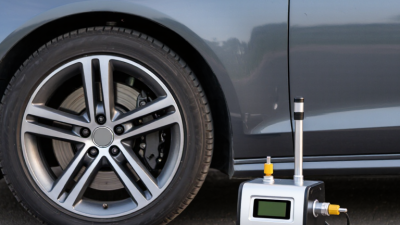
7 Tire Valve Sensor Buying Tips for Global Buyers

A tire valve sensor may be small, but it affects safety alerts, installation time, and replacement costs across an entire vehicle fleet. For global buyers, the right choice depends on more than unit price. Frequency compatibility, valve-stem material, battery life, protocol support, and supplier testing records all matter. A sensor that looks suitable in a catalog can still create problems at the workshop if its fitment data or pairing process is unclear.

The stakes are measurable. In its 2005 analysis of Federal Motor Vehicle Safety Standard No. 138, NHTSA estimated that tire-pressure monitoring systems could prevent about 120 fatalities and 8,500 injuries annually. The U.S. Department of Energy also notes that fuel economy can fall by roughly 0.2% for each 1 psi drop in average tire pressure. These figures describe the value of pressure monitoring, not a guarantee that any individual sensor will deliver the same results. As tire expert Gene Petersen has emphasized in consumer tire guidance, TPMS alerts do not replace regular pressure checks. Buyers should treat sensor selection as one part of a broader maintenance plan.

This guide presents seven practical checks for evaluating a tire valve sensor, from vehicle coverage and sealing quality to documentation and after-sales support. Ask suppliers for verified application lists, test records, and clear warranty terms. Check the details before placing a bulk order. A little verification now can prevent mismatched parts, delayed installations, and avoidable returns.
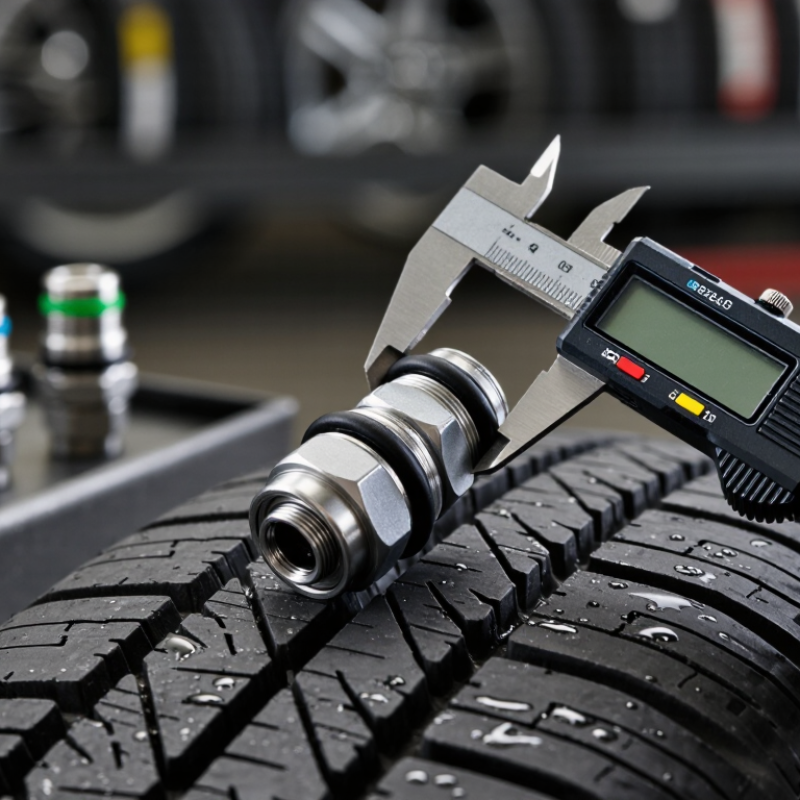
7 Tire Valve Sensor Buying Tips for Global Buyers

Define Valve-Mounted TPMS Sensors and Distinguish Them from Indirect Systems

A valve-mounted TPMS sensor measures tire pressure directly. It attaches to the valve stem, usually inside the wheel, and sends readings to the vehicle’s receiver. The driver can receive pressure data from individual tires, depending on the vehicle’s display.

Not the same thing.

NHTSA’s Federal Motor Vehicle Safety Standard No. 138 uses a warning threshold of 25% below the recommended cold inflation pressure, subject to specified minimum thresholds. That figure is a useful reference when comparing sensor specifications.

Indirect TPMS does not measure air pressure at the valve. It uses wheel-speed sensors, often shared with the anti-lock braking system, to detect rotation changes that may indicate a low tire.

The distinction matters: a direct sensor can report pressure, while an indirect system infers a problem and may need recalibration after tire service. Small, but important.

For global buyers, check valve fit, frequency compatibility, battery serviceability, and whether the receiver displays individual tire readings.

A valve sensor is not automatically the better choice; replacement costs and workshop support matter too. I would verify those details against the vehicle’s manual, not just a product sheet.

Some specifications look clear until wheels are changed.

Match Vehicle Fitment, Protocol, and the Common 315/433 MHz Frequencies

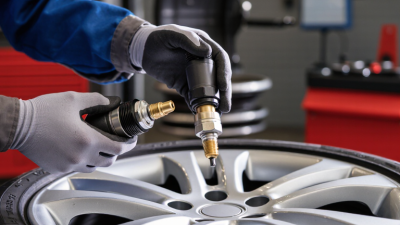
Choosing a tire valve sensor starts with the vehicle, not the frequency printed on a box. Confirm model year, trim, market, and original sensor type. Two cars with similar names may use different systems. Check the valve stem too: clamp-in metal stems and snap-in rubber stems are not interchangeable in every wheel. Small detail, big consequence.

Many applications use 315 MHz or 433 MHz, but regional patterns are only a starting point. A sensor on the right frequency may still use an incompatible protocol or data format. Match its protocol to the vehicle’s receiver and verify application data before ordering. Ask whether the sensor is preconfigured or needs programming, and whether the vehicle requires a relearn after fitting. Frequency alone is not enough.

For mixed-market inventory, record frequency, protocol, fitment range, and service procedure separately. Clear labels help when cartons arrive. Before a bulk purchase, test a sample with suitable TPMS equipment and confirm stable readings after installation. Check the pressure display and warning-light behavior, following vehicle service instructions. Catalog matches are still provisional; supplier data can be incomplete, and one overlooked trim change can waste a day.

7 Tire Valve Sensor Buying Tips for Global Buyers - Match Vehicle Fitment, Protocol, and the Common 315/433 MHz Frequencies
Buying Tip What to Verify Practical Check Why It Matters
1. Match the vehicle application Vehicle make, model, model year, market, and TPMS configuration. Check a reliable vehicle fitment catalog and confirm whether the vehicle uses direct TPMS sensors. Fitment can vary by year, trim, and destination market—even for vehicles with the same model name.
2. Confirm frequency for the exact application The vehicle’s specified sensor frequency, commonly 315 MHz or 433.92 MHz. Use the vehicle’s service information or a compatible TPMS diagnostic tool; do not choose by region alone. 315 MHz is common in North American applications, while 433.92 MHz is common in Europe and many other markets. Exceptions exist.
3. Check protocol and data compatibility Sensor protocol, message format, and compatibility with the vehicle’s TPMS receiver. Verify application coverage in the sensor catalog or diagnostic-tool database, not just the printed frequency. Sensors on the same frequency may still use incompatible protocols or data formats.
4. Confirm programming and relearn requirements Whether the sensor is application-specific or programmable, and how its ID is registered to the vehicle. Before installation, confirm the required programming tool and whether the vehicle needs an OBD, stationary, or drive relearn procedure. A compatible sensor may still need programming and vehicle-specific ID learning before the warning light clears.
5. Match the valve and wheel fitment Snap-in rubber or clamp-in metal valve style, wheel-hole size, and clearance requirements. Check the wheel specification and sensor installation instructions; 11.3 mm is a common valve-hole size, but other sizes are used. Incorrect valve fit or insufficient clearance can cause poor sealing, installation problems, or wheel interference.
6. Check operating specifications Approved pressure and temperature ranges, tire application, and sensor service-life information. Compare the sensor specifications with the vehicle or tire requirements and review the applicable installation guidance. The sensor must operate within the conditions expected for the vehicle and wheel application.
7. Plan for service parts and local requirements Availability of replacement valve parts, seals, nuts, and applicable market or import requirements. Confirm which service parts are replaceable and check current requirements for the intended destination market. Serviceable parts can simplify maintenance; requirements may differ by country and product type.

Check Valve Material, Pressure Rating, and OE-Equivalent Sensor Specifications

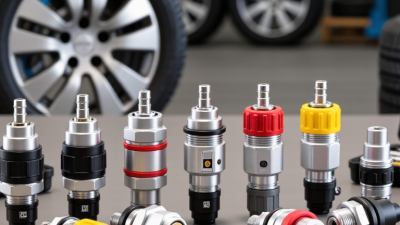
Valve material deserves more attention than its appearance. Brass stems resist corrosion in many everyday conditions, while aluminum stems are lighter but need compatible hardware. Rubber snap-in valves can suit lower-pressure applications, but confirm their rated pressure and speed limits against the vehicle’s requirements. A shiny finish proves little. Ask for material details and a documented pressure range.

Tip: Compare the sensor’s pressure range with the vehicle specification, not just its normal cold-tire pressure. Leave room for operating changes, and never treat the sensor’s maximum rating as the recommended tire pressure. Check temperature limits too, especially for vehicles facing large seasonal swings. I still double-check stem length and wheel clearance; catalogs do not always make those details obvious.

OE-equivalent means matching more than shape. Verify operating frequency, communication protocol, sensor dimensions, valve fit, and required identification or relearning process. Confirm compatibility by vehicle year, model, and trim, then request a current application list or test documentation. A sensor that fits the wheel may still fail to communicate. One useful buying habit: compare the specification sheet with the original sensor before ordering, and flag any mismatch instead of assuming it is harmless.

Verify Compliance: FMVSS 138 Sets a 25% Underinflation Warning Threshold

A tire-pressure sensor should be judged by more than its ability to send a signal. In the United States, FMVSS 138 sets requirements for tire-pressure monitoring on covered vehicles. Its warning criterion is generally tied to pressure falling 25% below the vehicle’s recommended cold inflation pressure, subject to applicable minimum activation pressures and vehicle requirements. That threshold is a warning trigger, not a recommended driving pressure. Small detail, but an important one.

For global buyers, confirm which rules apply in each destination market; FMVSS 138 is a U.S. standard, not a universal certification. Ask for test records showing warning performance with the vehicle’s specified tire sizes and cold-pressure settings. Check that the sensor works with the intended wheel configuration and that its warning behavior matches the vehicle system. It is worth checking twice. A mismatch may only appear after installation, when the tires are cold and the dashboard is being monitored. Paperwork can be tedious, and a test report may not cover every configuration. Verify the exact fitment before approving a purchase.

Compare Battery Life, Warranty, and Global Support Before Choosing a Supplier

A sensor’s battery claim is useful only when its test conditions are clear. Ask suppliers for expected service life under real transmission intervals, temperature swings, and vehicle use—not just a laboratory estimate. Request test records and the battery-replacement policy. Ask for evidence. A low unit price can become costly if the battery fails early and the sensor must be replaced.

Warranty terms deserve the same scrutiny. Check what is covered, how long claims take, and whether freight or diagnostic costs are excluded. NHTSA’s 2005 final rule for FMVSS No. 138 projected that TPMS could prevent about 120 fatalities and 8,500 injuries annually once fully implemented. That estimate is not a supplier scorecard, but it shows why dependable pressure monitoring matters. Not just a promise. Get coverage and exclusions in writing.

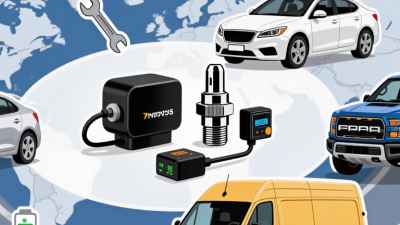
For cross-border purchasing, confirm technical support hours, languages, replacement-part availability, and response targets in each destination market. Ask for a sample escalation path: who handles a sensor that will not pair, and how quickly can a replacement ship? One awkward detail is easy to miss: support may exist, but not in your time zone. Compare suppliers using the same battery-test conditions, warranty period, and support questions, then keep the replies on file.